Last updated: 2026-08-03 · Written by the usedappliancestores.com data team. Store counts come from our national dataset of 6,671 active store listings, checked 2026-07-15.
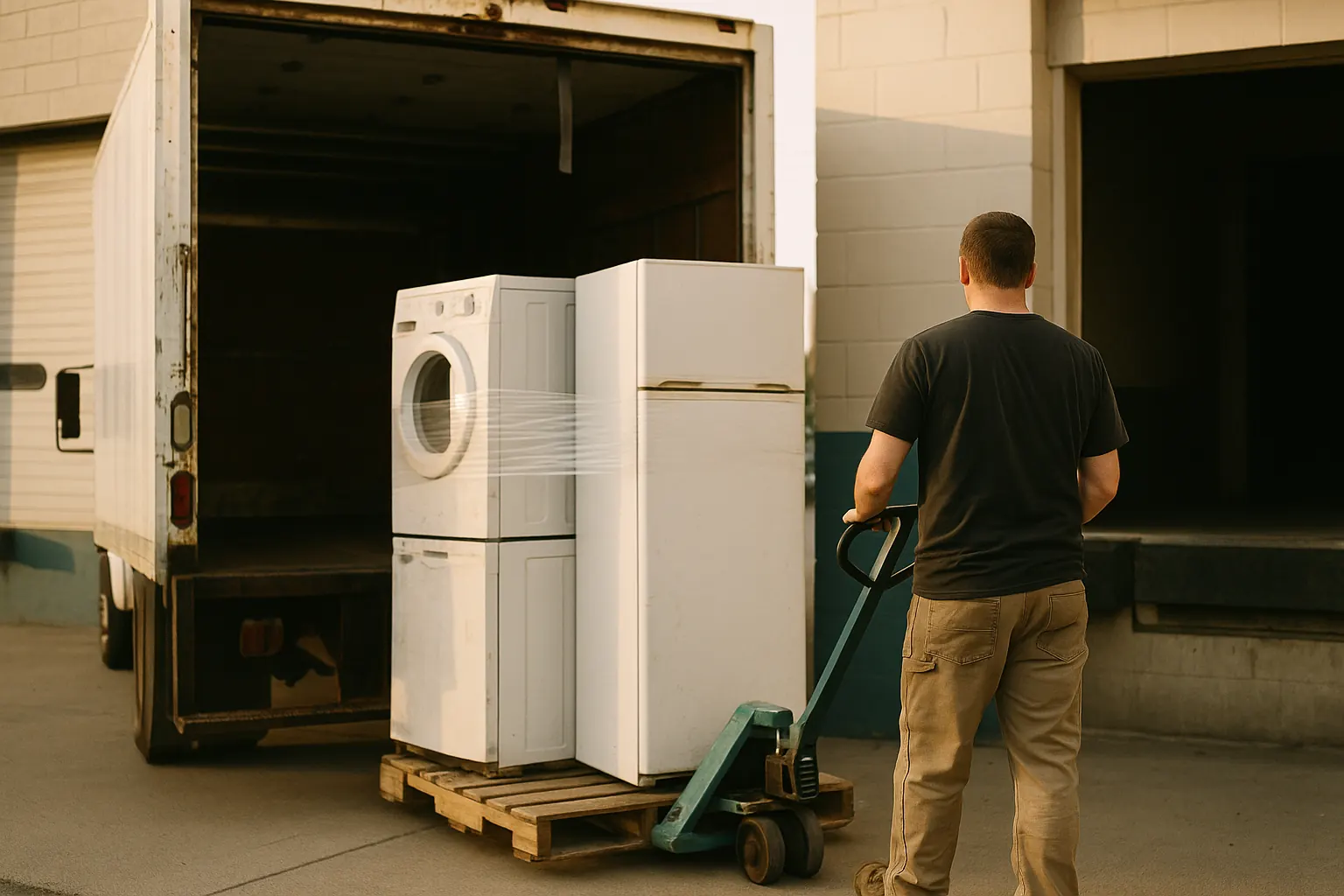
Six supply channels feed every used-appliance floor in the country: freight and distributor damage, retail returns and floor models, trade-ins, property turnover, off-lease and rent-to-own returns, and estate or auction buys. The channel a unit came through predicts its history better than anything the tag says, because each channel damages, wears, or preserves machines in its own way. No retailer writes this up, since the supply chain is trade knowledge that sells nothing. It is, however, exactly what a buyer needs to know, because "where did this washer come from?" is the single most revealing question you can ask at the counter, and this page tells you what each answer means.
The six channels, and what each does to the machine
| Channel | What the units are | Mechanical history | The risk that rides along | Typically flows to |
|---|---|---|---|---|
| 1. Freight & distributor damage | New units dented in shipping | None; never ran | Damage that is structural, not cosmetic | Outlets, scratch-and-dent dealers |
| 2. Retail returns & floor models | Open-box returns, display units | None to trivial; display fridges run cold for months | Missing accessories; warranty clock ambiguity | Outlets, big-box liquidation buyers |
| 3. Trade-ins | Units swapped in on new purchases | Ordinary home wear, age varies widely | Age; the trade-in was replaced for a reason | Full-line independent dealers |
| 4. Property turnover | Apartment, rental, and flip clear-outs | Rental-grade wear, often hard | Commercial-intensity use on residential machines | Volume used dealers, auctions |
| 5. Off-lease & RTO returns | Rent-to-own walk-aways, lease ends | Short but sometimes rough first life | Unknown care by a non-owner | Used dealers, refurbishers |
| 6. Estate & auction buys | Household clear-outs, storage lots | Whatever the house did to them | Sat unplugged for months; seals dry out | Small independents, resale nonprofits |
Channels 1 and 2 supply the scratch-and-dent and open-box categories defined in used vs. scratch-and-dent vs. refurbished vs. open-box: machines without a mechanical past. Channels 3 through 6 supply the true used market: machines whose past is the product, discounted accordingly. A store's channel mix is close to a business model, and the two questions below tell you which one you have walked into.
Channel 1: freight and distributor damage
Every appliance travels from factory to floor on a truck, strapped beside a dozen others, and a fraction arrives dented. The freight-claim system pays the retailer or distributor for the damage, the unit legally cannot sell as new, and liquidators move it into the scratch-and-dent channel at a structural discount. Two useful properties follow. The supply is proportional to shipping volume, so the brands that ship the most produce the most dents. Our brand data shows it directly: GE (at 449 of our stores), Whirlpool (413), and LG (397) dominate independent floors. The low-volume premium brands appear at a fraction of that rate. And the damage was priced by a claims adjuster before any retail markup, which is why the scratch-and-dent discount is the most consistent in the used market. What the discount should be, factor by factor, is in scratch-and-dent savings by brand and category.
Ask: "is this freight damage or a return?" A freight unit never ran. A return ran at least once, in someone's home, and belongs a category over.
Channel 2: retail returns and floor models
The returns pipeline moves wrong-size, wrong-color, and buyer's-remorse units out of big-box stores through liquidation contracts, often by the truckload and sight-unseen. Floor models join the flow at season changeovers. The machines are new or nearly so; the chaos is in everything around them: manuals gone, racks missing, fill hoses somewhere in a different truck, and a manufacturer warranty that may date from the unit's first sale rather than yours. The inspection rule for this channel is an inventory check, not a mechanical one, and the specifics are in the open-box and floor-model sections of used vs. scratch-and-dent vs. refurbished vs. open-box.
Ask: "what came in the box?" and "when does the warranty clock start, in writing?"
Channel 3: trade-ins
Full-line independent dealers take working units in trade against new purchases, recondition the good ones, and floor them. This is historically the cleanest used channel: the dealer met the previous owner, took the unit from a working kitchen, and knows its age to the year. The catch sits in the selection: people replace appliances that are old, failing, or both, so the trade-in pool skews late-life. The remaining-life arithmetic in used-appliance prices by type and region matters most here, because the channel's average unit is deeper into the NAHB lifespan table than any tag admits.
Ask: "do you have the manufacture date?" A trade-in dealer can answer from the rating plate in ten seconds. Hesitation here is a tell for the whole floor.
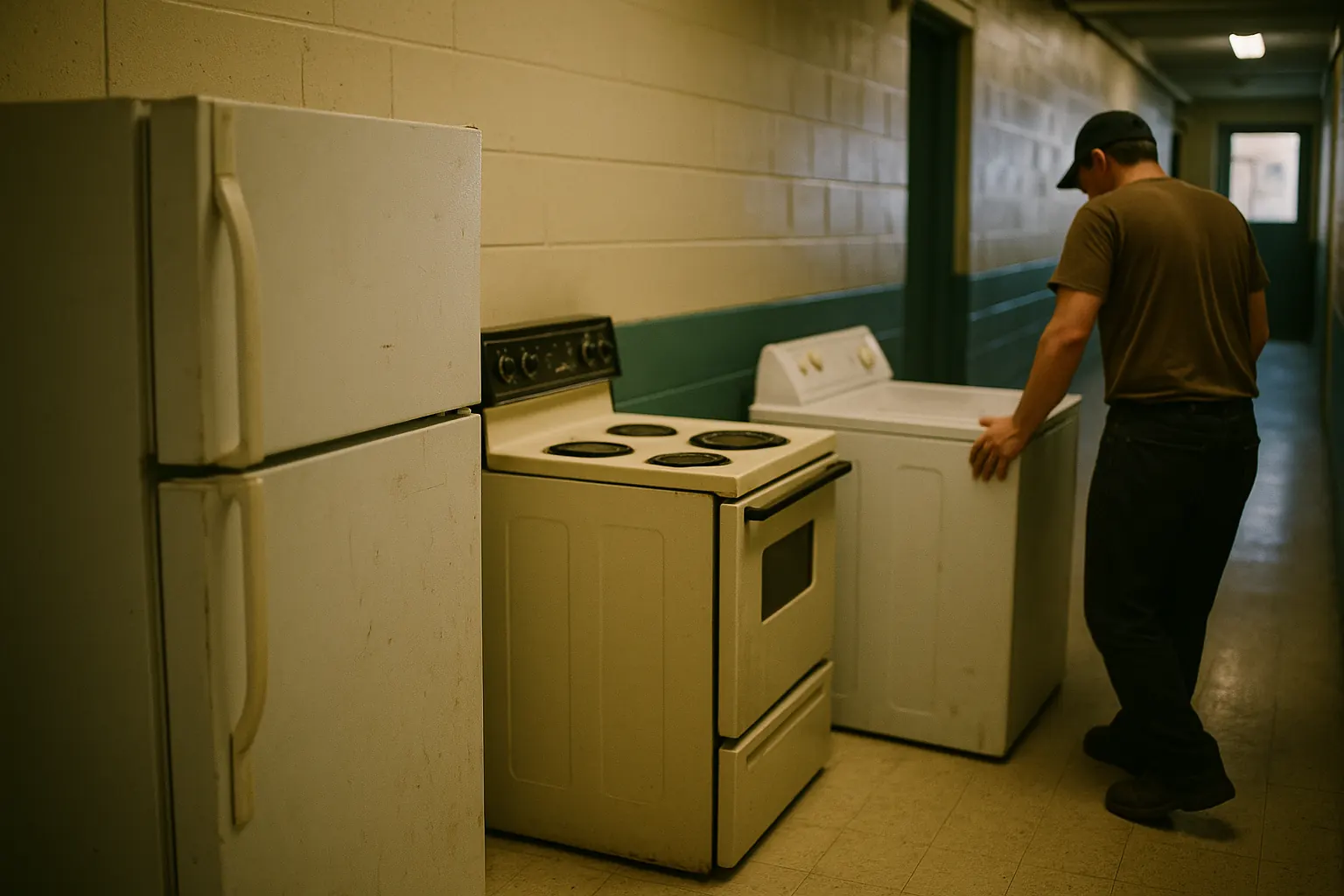
Channel 4 at its source: a turnover clear-out. These machines worked hard for people who did not own them.
Channel 4: property turnover
Apartment complexes replace appliances on renovation cycles, landlords clear units between tenants, and house flippers strip kitchens for staging upgrades. The volume is real and the machines are cheap. But this channel produces the hardest-worn inventory in the market. A rental washer serves a rotating cast of users who never read a manual and never owned the machine: commercial-intensity use wearing a residential badge. Units from this channel deserve the deepest used discounts and the most thorough version of the checks in how to inspect a used appliance before buying, with special attention to bearings and suspension on laundry.
Ask: "single-home unit or a rental buyout?" Volume dealers know exactly which pallet a unit came off.
Channel 5: off-lease and rent-to-own returns
When a rent-to-own customer exercises the walk-away right, the unit goes back young: months old, not years. Lease-end units arrive the same way. The machines then get inspected, sometimes reconditioned, and resold either through the RTO chain's own clearance channel or wholesale to used dealers and refurbishers. The age profile is the appeal; the care profile is the question, because a machine's first year was spent with a user who had a return option instead of an ownership stake. This channel is also where a lot of honest "refurbished" inventory originates, and the difference between refurbished and relabeled is the repair record, per the definitions in used vs. scratch-and-dent vs. refurbished vs. open-box.
Ask: "what was replaced when it came back?" A refurbisher answers with parts. A relabeler answers with adjectives.
Channel 6: estate and auction buys
Estate clearances, storage-unit auctions, and municipal surplus sales move household appliances in mixed lots, and small independents plus nonprofit resale operations are the natural buyers. The units span everything from a near-new fridge in a downsized house to a garage freezer that last ran during a previous administration. The channel-specific risk is dormancy: machines that sat unplugged for months dry out door gaskets, stiffen pump seals, and gum inlet valves, failures that show up in the first week of renewed daily duty rather than in a showroom test.
Ask: "how long since it ran daily?" and run the full inspection, gaskets first.
How each channel prices, from the store's side of the counter
Knowing the store's economics tells you how much room a tag has before you name a number. The acquisition costs differ by channel, and the spread between what the store paid and what the tag says is where your conversation lives:
- Freight and liquidation stock is bought by the pallet or truckload at steep, contract-set discounts. Margins are healthy but the story is fixed: the price reflects the damage assessment, and negotiation moves it mainly when a unit has sat. Ask how long it has been on the floor.
- Trade-ins often cost the dealer almost nothing beyond the credit given on the new sale, which is why trade-in-heavy floors have the most negotiating room of any used channel, and why their opening prices vary the most between stores.
- Turnover and auction lots are bought blind and cheap, in bulk. The store's cost per working unit includes the duds in the lot, so the tag on the survivors carries the lot's failures. Volume dealers price these to move; the discount for taking two units at once is usually there for the asking.
- RTO returns arrive through wholesale contracts at prices tied to the unit's age and condition class. The reconditioning cost is real and visible in the price; the negotiating angle is the repair record, or its absence.
The one-line summary for the buyer: the less a store paid for a unit's history, the more room the tag has. The channel answer from the section above tells you which conversation you are in before you name a number. The pricing formula that anchors any of these conversations is in used-appliance prices by type and region.
What does the channel mix tell you about the store?
The mix is the business model, and you can read it from the floor. A wall of matching dented stainless is a freight-channel outlet: expect strong warranty stories and no history questions worth asking. A floor of mixed-age, mixed-brand laundry pairs is trade-in and turnover stock: expect real history answers and prices that should track age honestly. A nonprofit warehouse is channel 6 at scale: expect zero provenance and prices that make the inspection worth the trip on its own.
What you cannot read from the floor is whether the store itself checks out. That is a separate exercise: of 9,409 candidate stores we assessed nationally, 2,718 (29%) failed identity, operating-status, or profile checks and were excluded from our directory. The store-level checklist is how to verify a used-appliance store. Note also how much of this market cannot be researched from a couch. Only 3,199 of our 6,671 active stores (48.0%) have a live website (checked 2026-07-15). The channel questions above get asked in person or not at all. Memorize them.
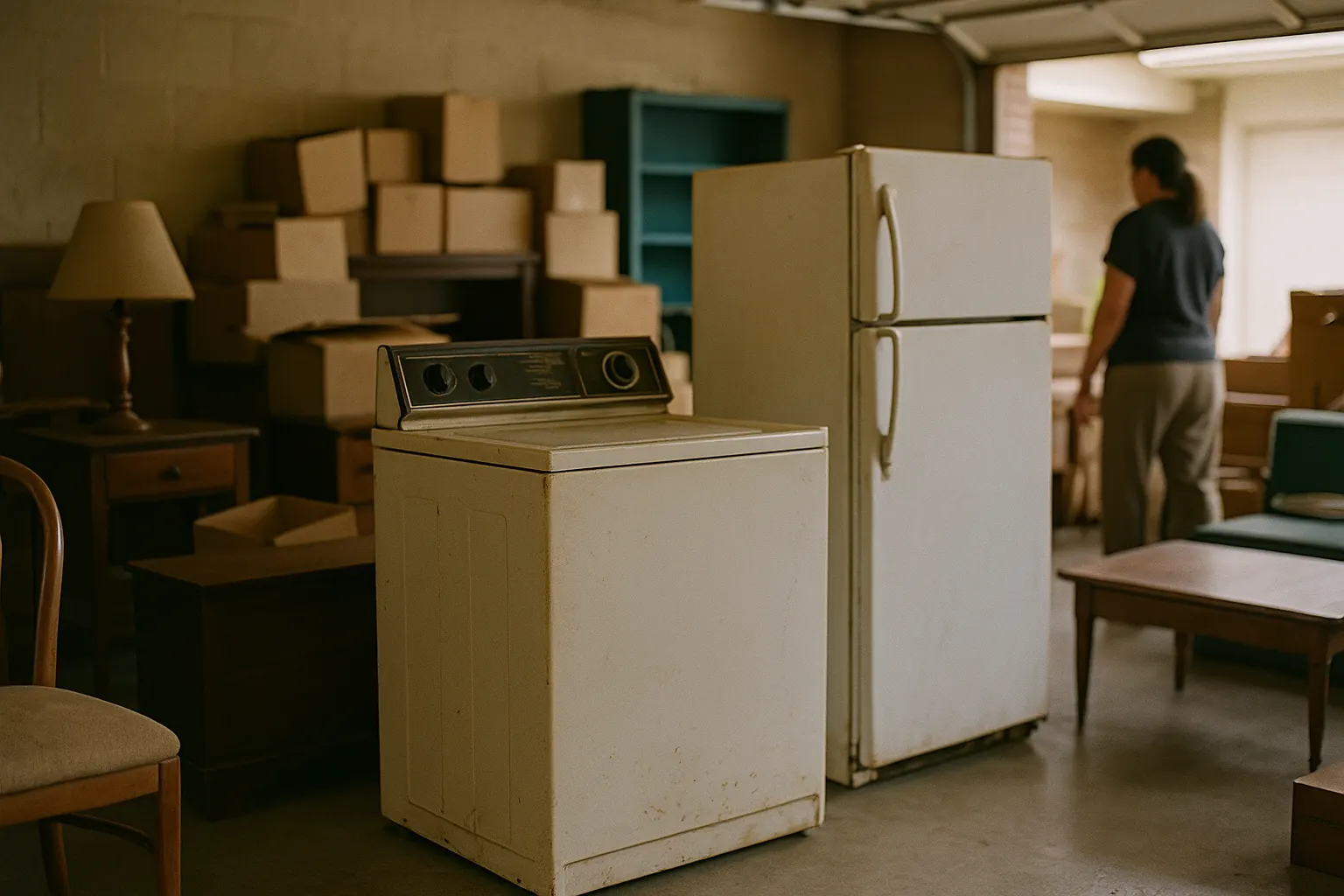
Channel 6: no provenance, no paperwork, and sometimes the only near-new unit in the county at half price. The inspection is the whole game here.
The one-table version
| If the answer to "where did it come from" is... | Then the price should reflect... | And your check is... |
|---|---|---|
| "Freight damage, never installed" | New mechanics minus visible damage | Damage location (scratch-and-dent savings by brand and category) |
| "Big-box return" | Near-new minus accessory risk | Box contents, warranty start date |
| "Trade-in from a customer" | Age against the lifespan table | Manufacture date, then the math |
| "Apartment renovation buyout" | Hard wear, deep discount | Bearings, suspension, full inspection |
| "Rent-to-own return" | Young unit, unknown care | Repair record, then inspection |
| "Estate purchase" | Dormancy risk, priced low | Gaskets, seals, first-week failure modes |
| No answer at all | The risk of every row above at once | The store itself (how to verify a used-appliance store) |
Find the stores behind all six channels near you on the browse checked stores by state, or start from a segment: used appliances, scratch and dent, appliance outlets.
Sources
- usedappliancestores.com store dataset, 2026-07-15 build: 6,671 active listings; brand-association counts; assessment funnel.
- Channel structure: trade practice as described across freight-claim, retail-liquidation, and rent-to-own industry documentation; stated as the market's structure, not as measured volume shares. No public dataset measures channel shares for this market, and we do not invent one.
- National Association of Home Builders / Bank of America, Study of Life Expectancy of Home Components, 2007 (lifespan references).