Last updated: 2026-08-03 · Written by the usedappliancestores.com data team. Failure-rate figures come from our own national screen of 9,409 candidate stores.
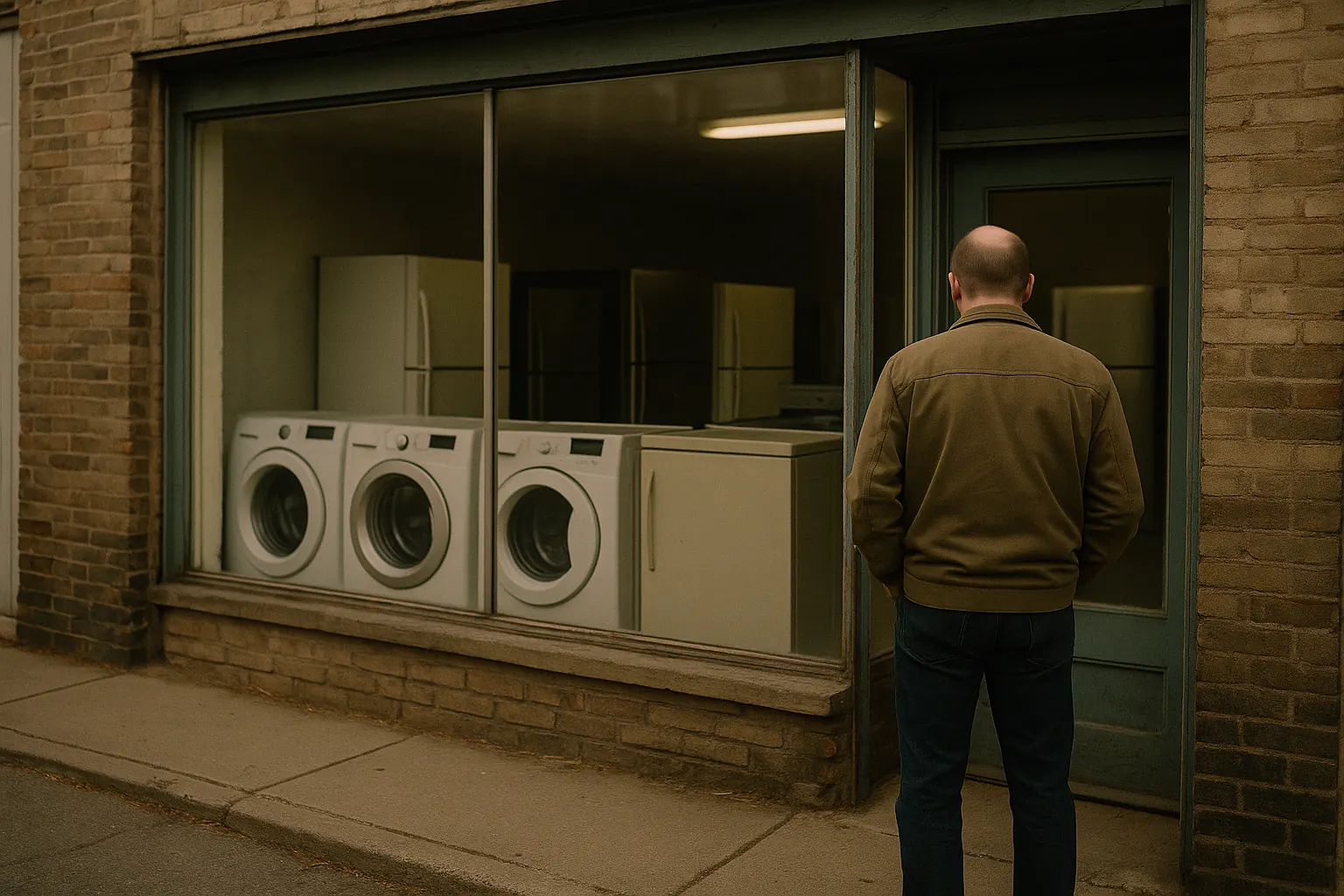
Run seven checks before you hand a used-appliance store your money: business identity, operating status, physical address, live web presence, segment evidence, written guarantee, and review trail. Each takes minutes and uses public sources. We ran an automated version of this exact screen on 9,409 candidate stores nationwide; 2,718 of them (29%) failed and were excluded from this directory. Nearly a third of the listings you will find in the wild do not check out, and that base rate is what justifies the ten minutes.
Why checking matters: the directory-padding problem
Appliance-store directories routinely pad their counts. In our 2026-07-14 review of national used-appliance and scratch-and-dent directories, we found "verified" listings that were national big-box and rent-to-own chains rather than independent resellers, and city listings filed under the wrong state entirely. A count is not a vetting. Every listing on this site instead carries a computed verification score with each check dated and disclosed, and the same logic works as a manual checklist for any store you find anywhere: a marketplace seller, a shop from a road sign, a name from a neighbor.
The economics of the trade make the checking non-optional in a way it is not for, say, bookstores. A used appliance is a few hundred dollars, heavy enough that returns are hard, and sold by a fragmented population of very small businesses: the 2023 County Business Patterns count 5,433 US household-appliance-store establishments, roughly 90% of them under 20 employees. Small is not bad; small means the paper trail replaces the brand as your protection.
The 7 checks
1. The business exists on paper
Search the store's name in the state's business registry (every state runs a free public one, usually under the Secretary of State). A registration proves a legal entity stands behind the sale; its filing date tells you how long. No registration is not automatically disqualifying for a small shop, but it moves the burden onto the other checks, and it means the guarantee in check 6 is only as good as the person who signed it.
2. The business is currently operating
Dead stores linger in directories for years. Check that the store's Google Business Profile exists and is not marked permanently closed, and that recent reviews or posts exist. In our national screen, 526 candidate stores were confirmed no longer operating and another 247 had no business profile at all. A phone call settles it in thirty seconds, though note the base rate before you rely on that route: only 1,902 of our 6,671 active listings, 28.5%, publish a checkable phone number at all (checked 2026-07-15).
3. The address is real and consistent
The address on the store's website, its business profile, and its registry filing should agree. Mismatched identity was the single largest failure in our screen: 1,548 candidates failed identity matching between their claimed name and location and their public business profile. A store whose own sources disagree about where it is has failed the cheapest possible test, and you have not yet left your chair.
4. The web presence is alive
A live website is not mandatory for a legitimate small shop, and our data shows fewer than half operate with one: 3,199 of our 6,671 active listings (48.0%) have a live website (checked 2026-07-15). But when a site exists, it should load, name the same business, and show current hours. A dead domain plus a live storefront claim is a flag worth resolving with a call before a drive.
5. The store actually sells what the listing claims
"Appliance store" covers new-appliance dealers, repair shops, and parts counters. If you need used or scratch-and-dent inventory, look for the store saying so itself: on its site, in its business-profile category, or in its name. In our dataset, 1,987 of 6,671 active stores show positive evidence of selling used inventory, and at the 2026-07-15 screen we recorded the evidence class for each rather than treating all evidence as equal: first-party website text for 1,018 stores, a name signal for 523, a maps category for 452. The strength of the evidence is part of the listing, because "the store's own site says so" and "a directory said so" are not the same fact. What each segment label means on the machine itself is defined in used vs. scratch-and-dent vs. refurbished vs. open-box.
6. The guarantee is written
The manufacturer warranty is almost never in play on a used unit; the store's own guarantee is your coverage. Ask for it in writing before purchase: length, what it covers (parts, labor, exchange), and who performs the service. A store that tests units and stands behind them has this answer ready. A "sold as is" answer is legal in most states and is also a price signal, and it does not always strip as much protection as sellers imply: the state-by-state rules on what survives an as-is sale, including the states that refuse to enforce the disclaimer at all, are in used-appliance warranty rights by state.
7. The review trail is consistent with the claims
Read the negative reviews first and look for the specific failure patterns of this trade: units failing within days, guarantee refusals, delivery no-shows. A handful of bad reviews over years is a normal small business. The same complaint repeated is data. Weigh the review trail against the store's age from check 1; forty reviews across ten years and forty reviews across ten months describe different businesses.
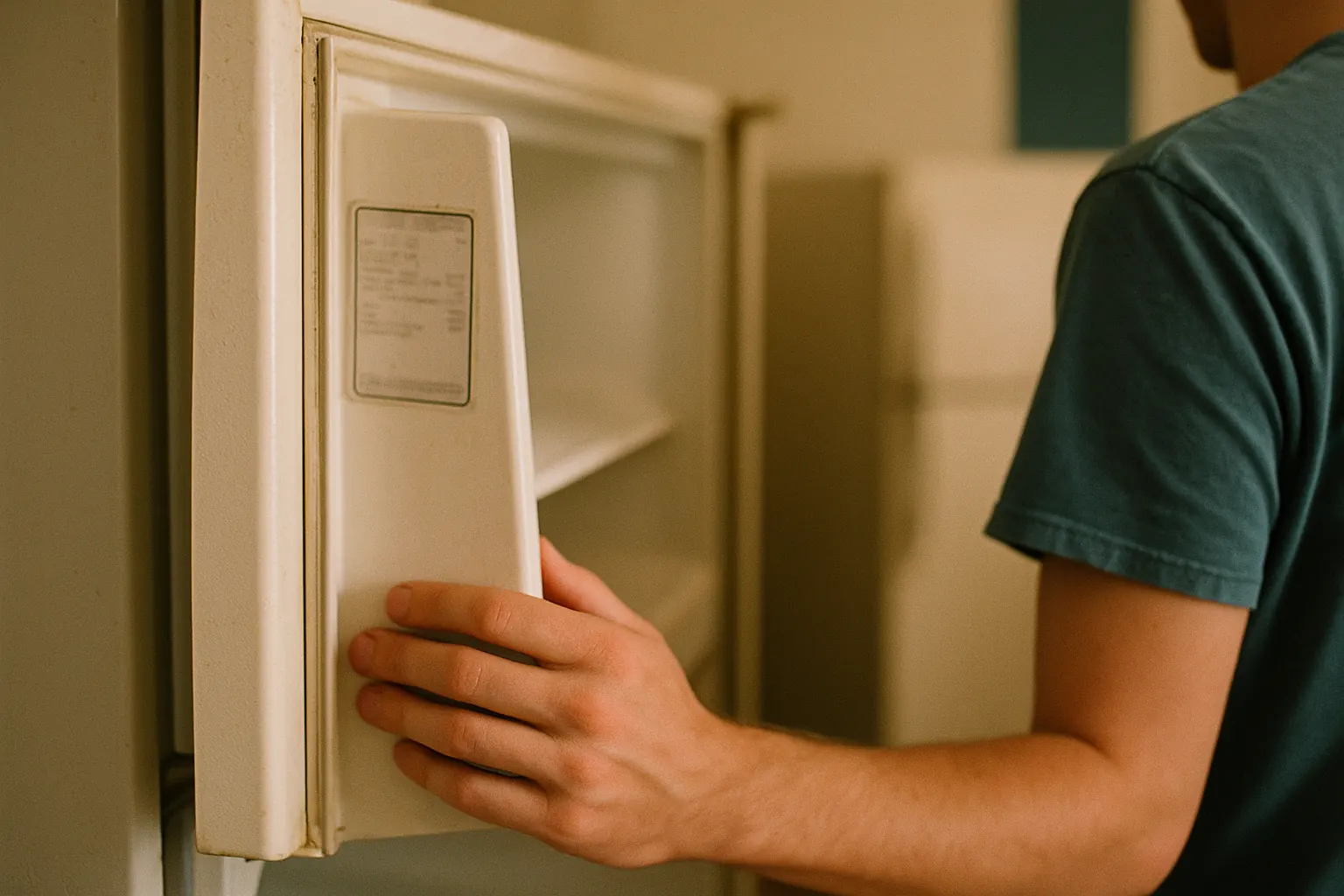
The single strongest sign that a store's guarantee means something: a bench where repairs actually happen.
The quick version
| Check | Free source | Kill signal |
|---|---|---|
| 1. Legal entity | State business registry | No filing + evasive answers |
| 2. Operating | Google Business Profile | Marked closed, or silent for a year |
| 3. Address | Site vs. profile vs. registry | Sources disagree |
| 4. Website | The store's own domain | Dead domain, live claims |
| 5. Sells the segment | Store's own site/category | No evidence anywhere |
| 6. Guarantee | Ask, in writing | Verbal only |
| 7. Reviews | Any review platform | One failure pattern, repeated |
The thirty-second phone script
Half the market has no website, so the checklist's field version runs by phone, and three questions carry most of its weight:
"Do you have used washers in stock right now, and what do they run?" "What guarantee comes with them, written?" "Can you read me the manufacture date off one you'd recommend at that price?"
The answers grade themselves. A real floor answers the first from memory, because inventory is their day. The second separates the written-guarantee stores from the as-is stores in one sentence, which is a price conversation either way. The third is the tell: a store that walks to the machine and reads you a plate is a store that knows its inventory unit by unit, and a store that answers "they're all pretty recent" has told you how they price age too. Ninety seconds, three checks deep, before any driving.
The checklist, run on a real Saturday
How the seven checks compress in practice. You find "Mike's Appliance Outlet" from a road sign; the whole verification runs from a parking lot in about eight minutes:
- State registry search on the phone: an LLC filed six years ago, active. (Check 1 clears; six years is a real business.)
- The business profile: 4.1 stars over 60 reviews across five years, marked open, photos show the actual floor. (Check 2 clears.)
- Address on the profile matches the registry filing and the sign in front of you. (Check 3 clears.)
- No website. (Check 4: open, not failed; half the legitimate market lives here.)
- Profile category says "used appliance store" and the window shows laundry pairs. (Check 5 clears.)
- Inside, the counter answer is "ninety days parts and labor, it's on the receipt." (Check 6 clears, and this store just separated itself from most of the county.)
- The negative reviews, read while they pull the unit: two complaints in five years, one about delivery timing, none repeated. (Check 7 clears.)
Result: a no-website store from a road sign, verified deeper in eight minutes than most directory listings ever get. The machine still gets its own inspection (how to inspect a used appliance before buying), but the seller-side risk is now priced, which was the whole exercise. Reverse the outcomes (registry empty, profile closed-marked, verbal-only guarantee, one complaint pattern on repeat) and the same eight minutes saves you the afternoon and the $400.
What failing a check actually means
The checklist is a scale, not a trapdoor. A store can fail check 4 and be excellent: roughly half of real, operating appliance stores have no working website, and some of the deepest used inventory in the country sits behind storefronts that have never owned a domain. What the checklist does is tell you which questions remain open when you walk in. No registry filing means the written guarantee carries the weight. No web presence means the visit and the phone call carry it. What disqualifies a store is different: signals that contradict each other, or a seller who resists the questions. Every legitimate store answers "how old is this unit and what is your guarantee" daily. The one that bristles at it has told you what you needed to know at zero dollars.
The same scale prices the purchase. A store clearing all seven checks with a written 90-day guarantee earns its asking price. A store at four of seven earns a discount roughly the size of the risk you are absorbing, which is the same arithmetic as an as-is sale in used-appliance prices by type and region. And whatever the store scores, the unit still gets its own ten minutes: the machine-by-machine routine is in how to inspect a used appliance before buying.
How does this map to our scores?
Every store page on this site shows the automated version of these checks: registry match, operating status, address consistency, website liveness, and segment evidence, each dated and each scored. Across the 6,671 active listings, 2,433 currently rate as verified tier, 2,436 as attributed, and 1,802 as unverified, with 2,033 stores scoring 80 or above (checked 2026-07-15). The score is our disclosed evaluation of what we could check on a stated date, not a guarantee of any transaction. If you operate a store and something is wrong or missing, use the correction flow linked on every listing; corrections are logged publicly.
One note on what the score is not: we hold no ratings and no reviews, on purpose. Check 7 is yours to run, on the platform of your choice; our lane is the checkable public record.
Start from your state on the browse checked stores by state, or from a segment: used appliances, scratch and dent, appliance outlets. If the store checks out and the question becomes whether the machine is worth its price, the value math is in is buying used or scratch-and-dent worth it.
Sources
- usedappliancestores.com national store screen, 2026-07-15 build: 9,409 candidates assessed, 6,691 published at the screen, 6,671 currently active; 2,718 excluded (identity mismatch 1,548; not operating 526; no business profile 247; checks pending 397); verification-tier and score-band counts.
- US Census Bureau, County Business Patterns 2023, NAICS 443141 (household appliance stores): 5,433 establishments, ~90% under 20 employees.
- Directory-padding review of live national used-appliance directories, checked 2026-07-14.